Skip to content
Ditch the Do-Do

Meet Ditch. She’s here to help your toddler ditch the dummy.

She takes it, and she leaves a star. A gentle, no-tears way to let go of the dummy — a story they can believe, a ritual they take part in, and something they can point to on the nights it gets hard.

Dummy or pacifier — the guide is written for both, and swaps wording on the page.

Where we’re from, a dummy is a do-do — and Ditch is the fairy who comes to take it. Dummy, paci, binky or soother, she knows exactly what you mean. She leaves a star in its place.

You already know it needs to go

The dentist mentioned it. Nursery mentioned it. Your mother-in-law definitely mentioned it. What nobody tells you is how — in a way that doesn’t cost you a fortnight of 2am screaming.

Cold turkey works for some children. For most, the problem isn’t the sucking — it’s that the dummy is the thing that tells their body the day is over. Take it away with nothing in its place and you haven’t removed a habit, you’ve removed a cue.

The short version

The Dummy Star Method replaces the dummy with a story, a ritual and a keepsake. Your child decorates a box, puts every dummy in the house inside it, and leaves it out for the garden fairies. Overnight the fairies take them, turn them into a star, and leave a letter and a small treat in return. On hard nights you go outside together and find the star. The comfort doesn’t disappear — it moves somewhere they can still reach it.

We didn’t set out to make a method. We put a few little fairy houses in the flowerbed with solar lights in them, because our daughter loved fairies and they came on by themselves at dusk. We let her find them on her own and acted amazed. Then on clear evenings we started looking up — she could pick out Orion’s Belt before she could write her name.

So when we told her the fairies needed dummies to make new stars, it wasn’t a story we’d invented that afternoon. It was already her garden and already her sky. She decorated a box, put every dummy in it herself, and left it out for them. There was a letter in the morning, and some sweets, and a star that evening.

That’s the whole thing. The rest of this site is just the detail — what to say, what to prepare, and what to do on the third night when it clouds over.

Sarah & Dan — the parents who did this first

How it works, in four evenings

Nothing here needs buying, and none of it happens on a schedule you impose.

  1. Tell the story

    A few nights before, at bedtime. No pressure, no deal — just a story about garden fairies who need dummies to make stars, and who only take them from children who want to give them.

  2. Let them choose the night

    This is the part that does the work. A child who picks the date is giving something away. A child who is told the date is having something taken.

  3. Decorate the box together

    Find a small box and let them cover it in stickers, crayon and glitter. Every dummy in the house goes in — then it goes out to the fairy garden at dusk.

  4. Find the star

    In the morning the box is gone and a letter has arrived. That evening, and every hard night after, you go outside and pick out their star together.

Read the full step-by-step guide →

Start where you are

Dummy or pacifier — the method is the same, but the words your child knows aren’t. Pick the one that sounds like your house.

If you call it a dummy

UK vocabulary, UK dental and health-visitor guidance, and the dummy tree.

If you call it a pacifier, paci or binky

US vocabulary, US paediatric-dentistry guidance, and the trade-in trip. The method is the same; the words change on the page.

The free fairy letter

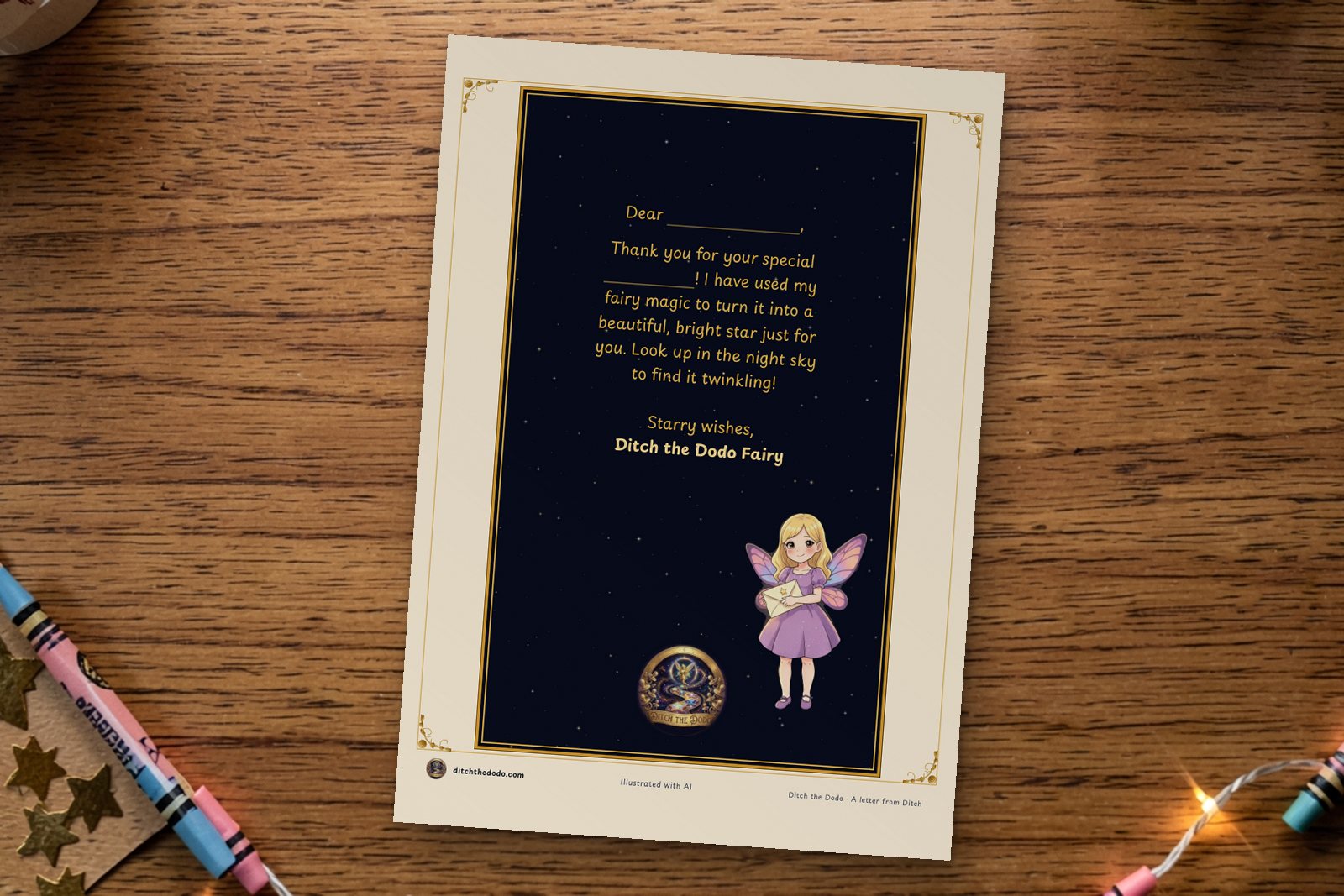
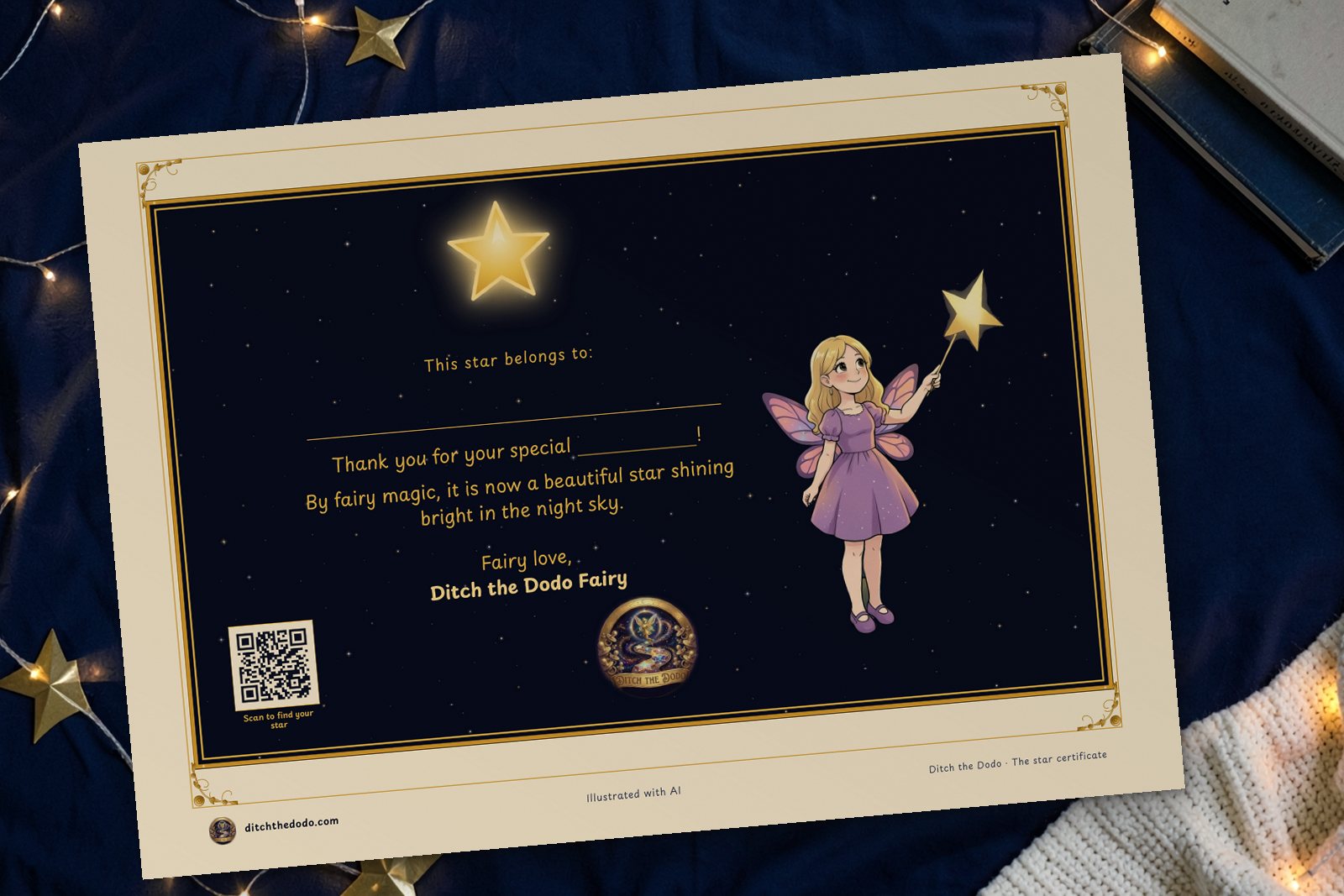
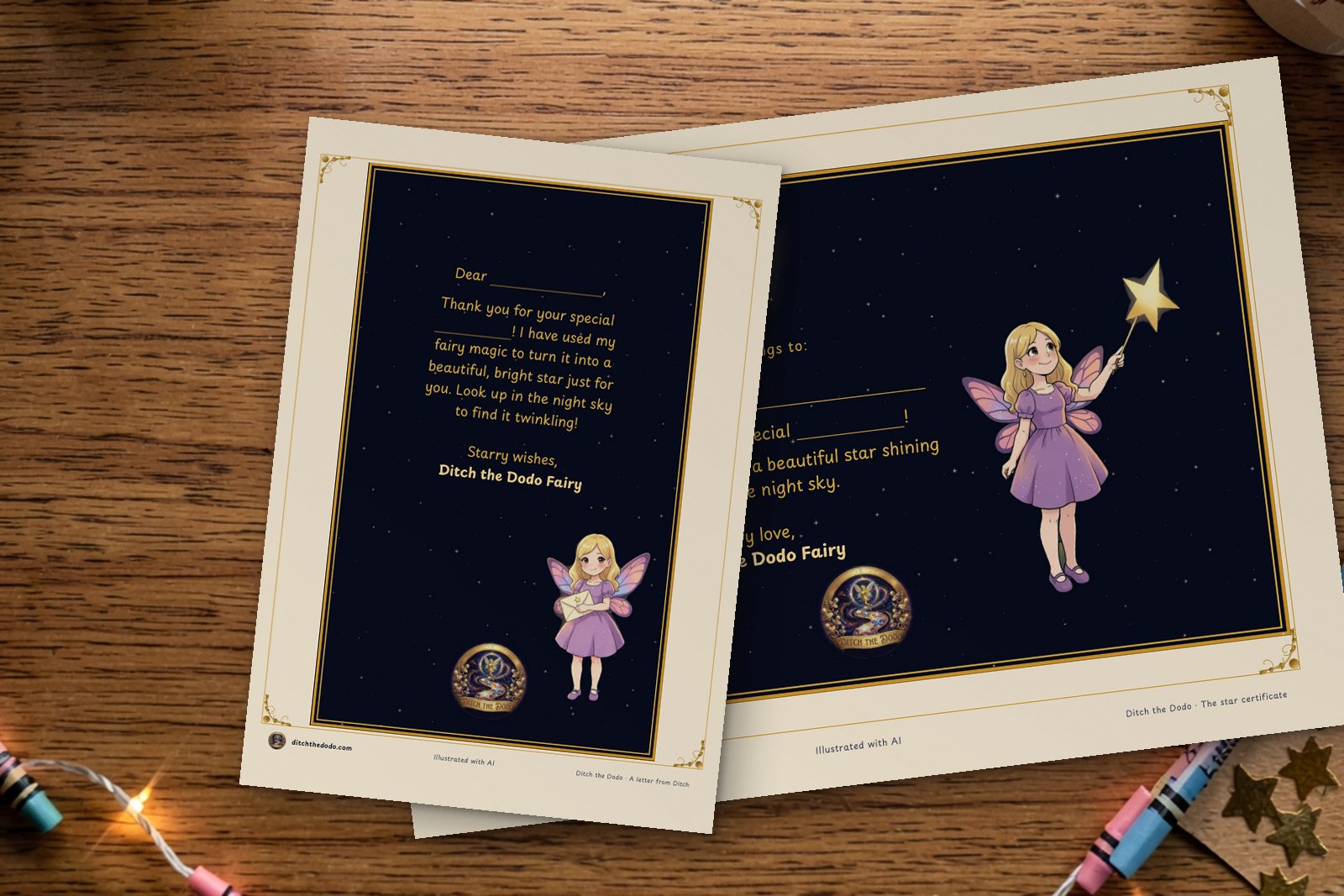
Four letters, a bravery certificate, and the trick almost nobody thinks of — a second letter, written in advance and hidden, for the morning after a bad night. Take the wording →

The Cloudy Night

A four-minute bedtime story for the evening you go outside together and there is nothing to see. Free to read aloud, print, or use at nursery. Read it →

The Dummy Star Kit

Everything the method asks for, ready to print or ready to post — so you’re not designing a fairy letter at 9pm the night before.

The printable kit
Parent guide, four fairy letters, a bravery certificate, a colouring sheet and the bedtime story. Download, print, done.

The keepsake kit
The printed guide and letter on proper card, a keepsake box for the certificate, a little fairy door, and biodegradable fairy dust.

Or take the letter template on its own, free — the method works whether or not you buy anything.

Common questions

What age should we do this?

Two to three and a half is the sweet spot — old enough to hold the story in their head for a few days, young enough to believe it completely. Under about 20 months, gradual reduction works better. Over four, run it openly rather than as a secret.

How long does it take?

For most children the sharp part is three to five nights, with sleep back to roughly normal within seven to ten days. Nights two and three are the hardest — that is normal, not a sign it is going wrong.

Do I have to buy anything?

No. The full method, the fairy letter wording, the certificate and the bedtime story are all free on this site. The kit exists to save you an evening of preparation, not to unlock anything.

What if we cave and give the dummy back?

It does not undo everything, but it does teach that enough crying reverses the story, which makes the next attempt harder. If it happens, stop, wait four to six weeks, and start again properly rather than half-restarting.